
A living inventory
Routers, switches, sites, point-to-point links and access points, with their IP, their model and which tower they belong to.
This is not a three-bullet brochure. It is the list of what an operator does every day and where they do it inside WispControl. If you are after something specific, it is in the index.
The module that gets used the most and shows the least when it works. A customer has contracts, a contract has services, and every service knows what it is billed, when, with which tax and to which account.

Everything you see here comes from the same table billing uses. There is no separate spreadsheet someone has to remember to update.
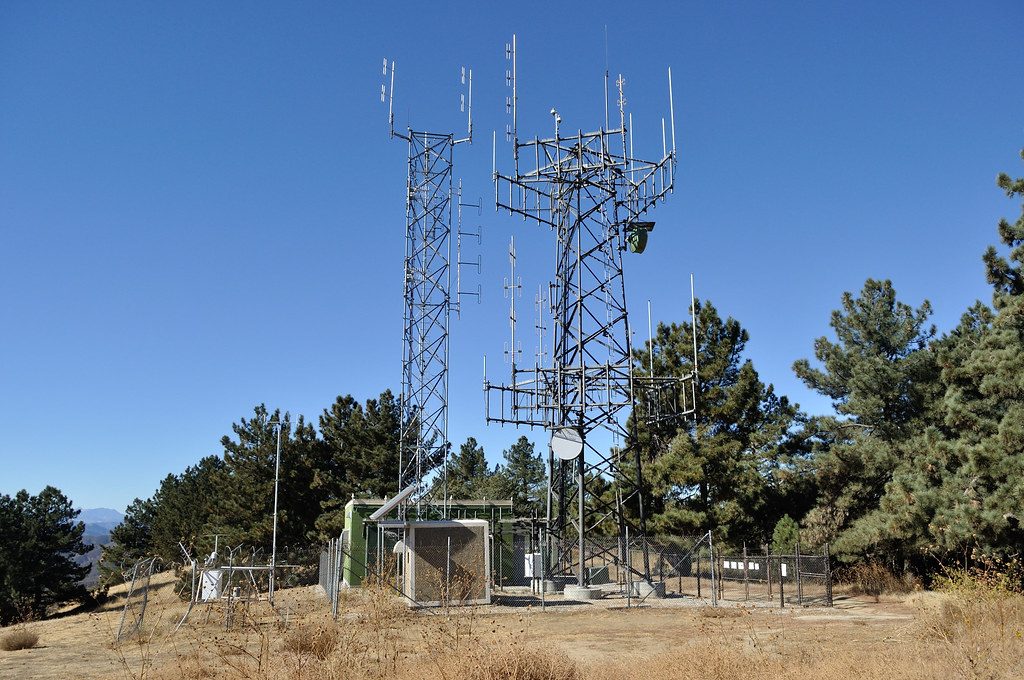
Every connection knows which antenna it comes off, with which IP, which RADIUS profile and which CPE is installed, down to its serial number. And you can warn customers before they call.
Routers, switches, sites, point-to-point links and access points, with their IP, their model and which tower they belong to.
Subnets, RADIUS and MikroTik pools, static IPs, reservation and release on cancellation.
Signal management per customer and frequency planning per sector, so you don't interfere with yourself.
Site outages, signal thresholds, network log and syslog. The alert opens a ticket and notifies.
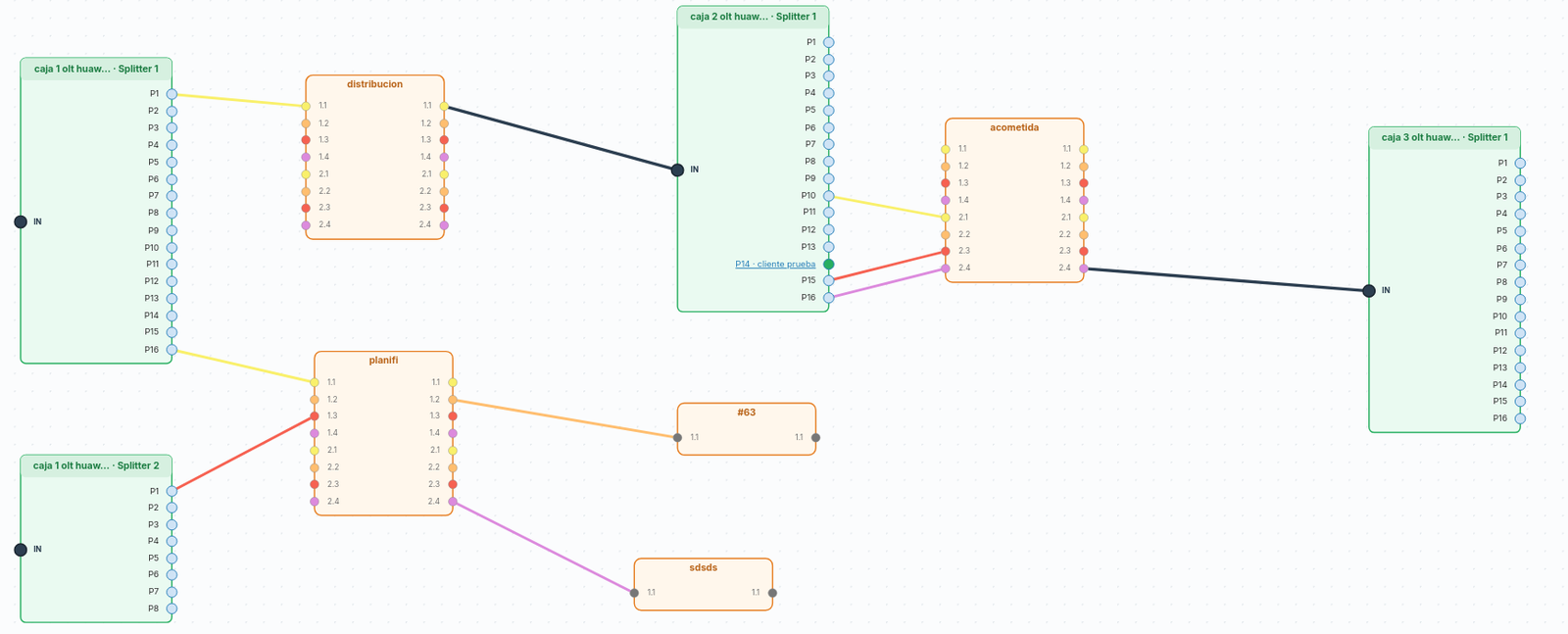
GeoRed is not a map with customers on it. It is the network: the OLT, the trunk, the splices, the splitters, every distribution box with its ports and the customer hanging off port 4. If you open a box to add someone, the system already knows whether there is room.

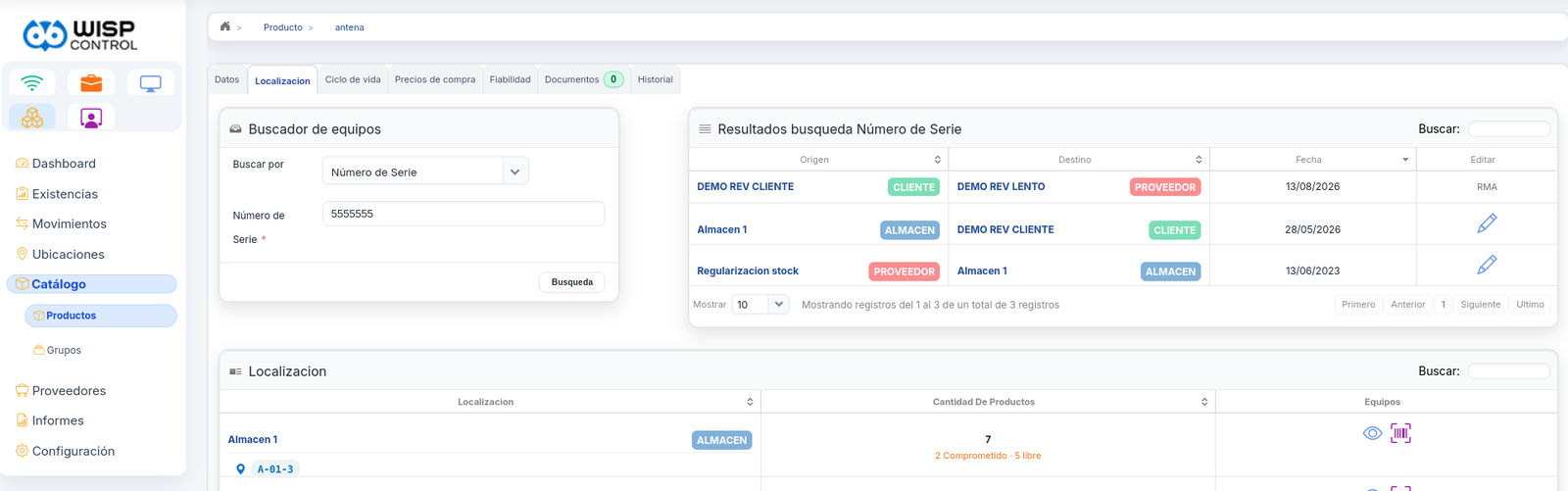
The warehouse in version 5.4 tracks the physical unit, not the pile. You know which specific ONT came in on which order, which van it travelled in, whose home it is in and whether it came back when they cancelled.

The sales rep works on the same database as administration. When they close a sale they do not fill in a form for someone else to retype: the lead becomes a customer with their contract, their plan and their installation appointment.
And commissions work themselves out from what each person has brought in, on their own terms: per sale, per contract term met and per product type. Out come settlements by period, targets and a leaderboard that, funnily enough, people do look at.
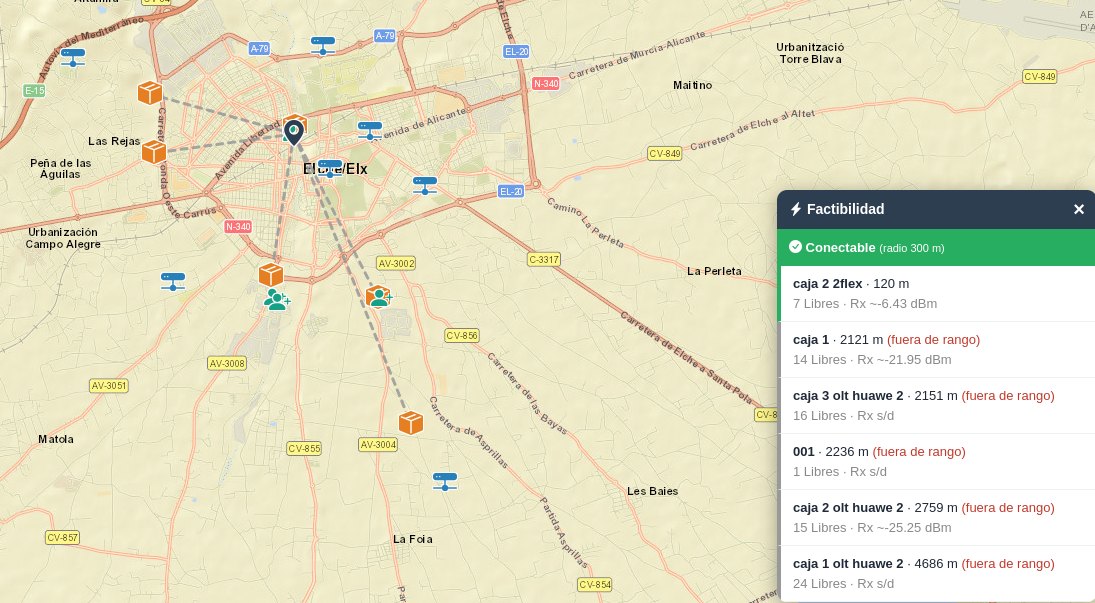
Who called, where they came from, who is handling them and where it stands, with a reminder so the lead doesn't go cold.
Anyone outside goes onto the list of leads without coverage, for when the fibre arrives.
Accounts assigned per rep, visit calendar and retention follow-up.
Generated per sale and per contract term, with settlements, targets and a sales leaderboard.
Nine MVNOs connected, the Zapi TV platform integrated, automatic CDR import and rating with the cost right next to the price. The customer gets one document and pays once.
| Operador | Líneas | Coste | Venta |
|---|---|---|---|
| Aire Networks | 412 | 3 984 € | 6 118 € |
| Finetwork | 128 | 1 216 € | 1 792 € |
| Lemonvil | 54 | 497 € | 702 € |
| Landline · CDR | — | 311 € | 598 € |
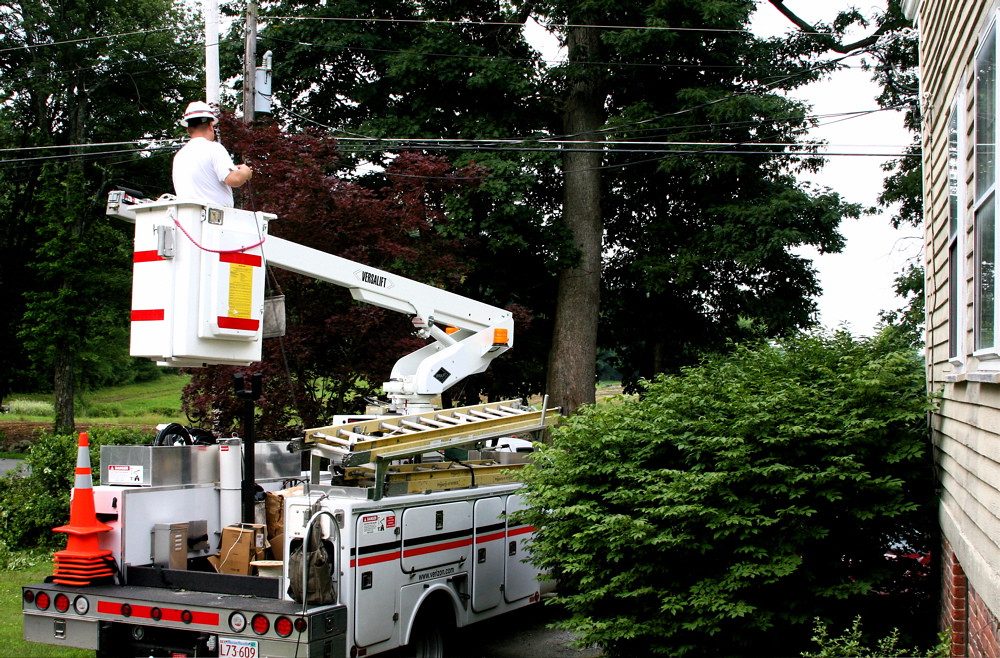
A ticket is not just a ticket: it carries the customer, the device, the site, the assigned technician, the appointment, the materials used and the work order the customer signs at the end.
By phone, from the customer portal, or raised on its own by a network alert.
To the area technician, with their calendar, their holidays and their appointments already loaded.
Work done, materials taken from the van and the customer's signature on the PDF.
It is invoiced if it was chargeable, the stock is deducted and it stays in the customer's history.
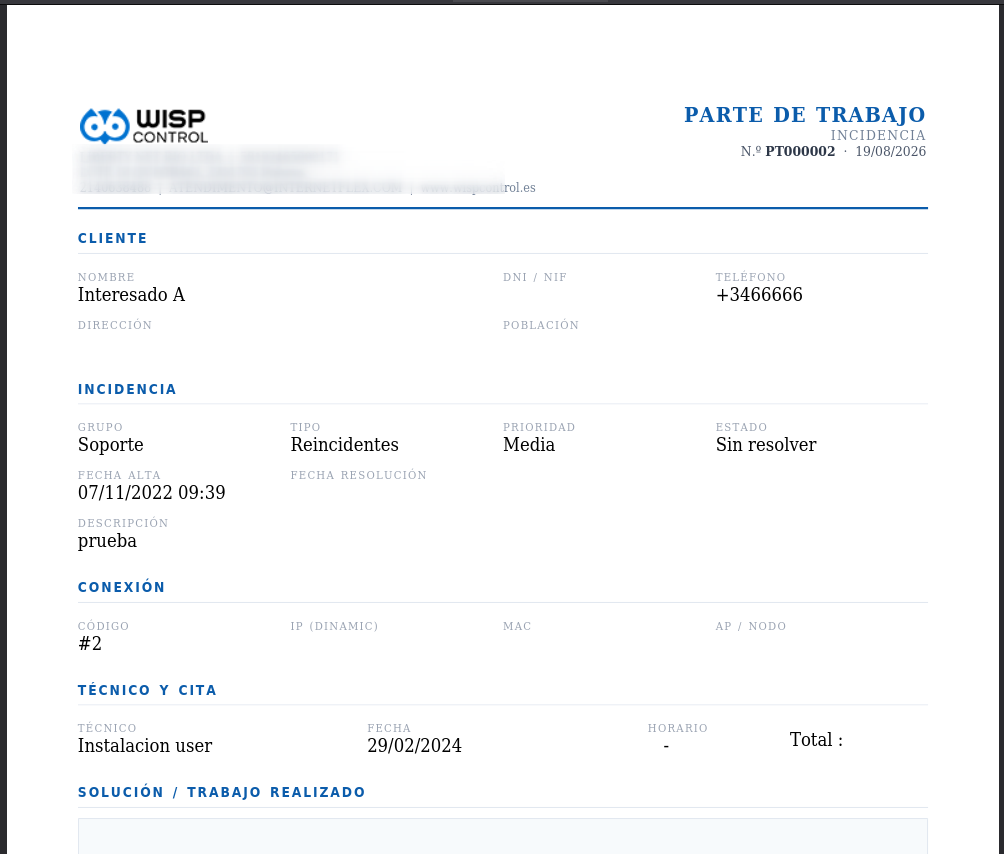
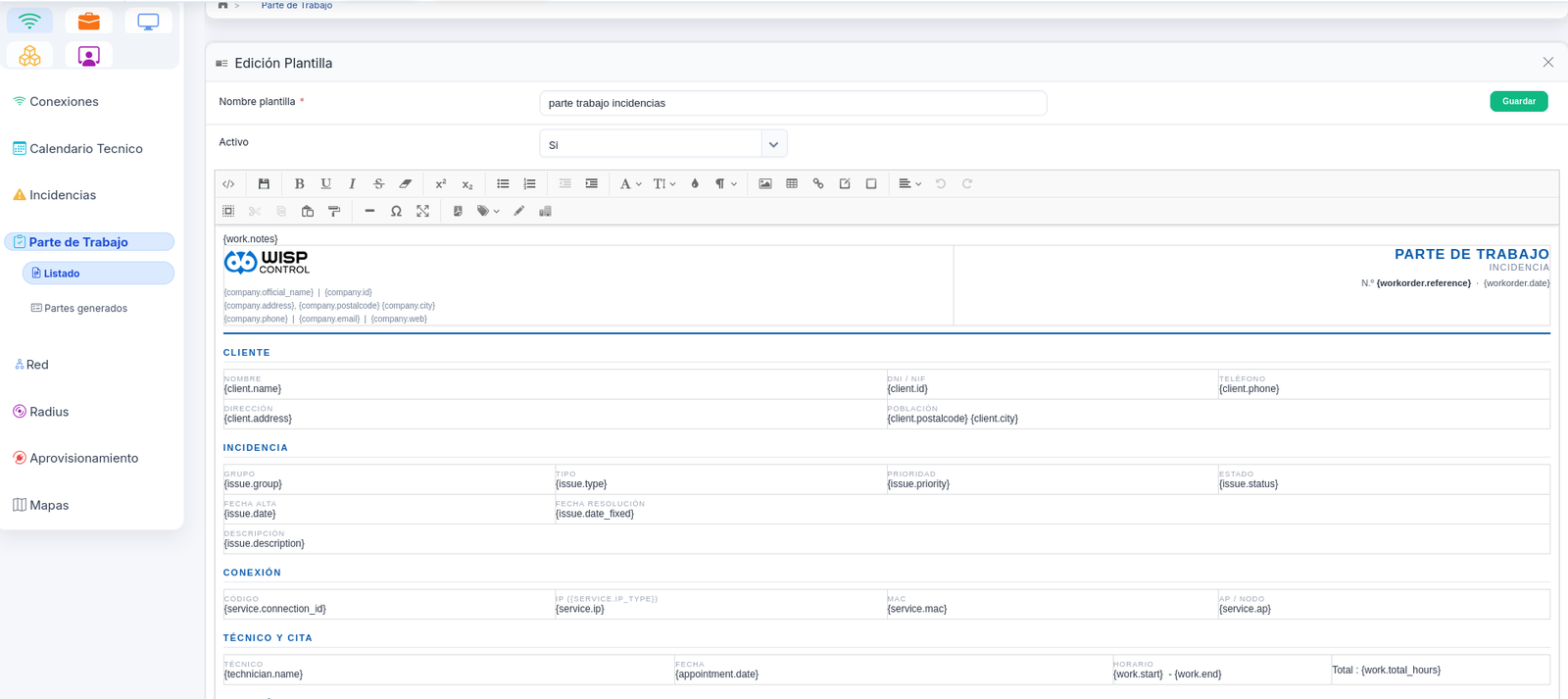
A single support screen: you find the customer while they are talking, see whether they are suspended for non-payment, whether there is an open outage in their area, when they last paid, and you open the ticket without navigating six menus. Designed to run in kiosk mode, with no access to the rest of the system.
An operator's ERP also ends up being where people clock in, where holidays are requested and where it is recorded who touched what. It is all in here, with the same user and the same permissions.
Roles per module and per screen. Multi-company with its own invoice series, banks and logos.
Each user places their widgets, resizes them and hides the ones they don't use. The layout is saved for them: the dashboard of the person doing the billing needn't look anything like the one of the person climbing a tower.
Clock-in with breaks, corrections, shifts, a signed monthly record and holidays. It meets working-time recording rules.
Your own private tasks, with repeats and reminders, that show on the team calendar as «busy».
Bulk and automatic, by email, SMS and WhatsApp, with templates per language and a delivery log.
Sign-ups over the last twelve months, traffic, usage, the customers with the most tickets and performance per technician.
So your website can create contracts and your tools can query customers, invoices and tickets without typing anything twice. With documentation and hands-on help.
Spanish, Catalan, English, French, Italian, Portuguese and Latin American Spanish. Notifications go out in the customer's language.
A web portal with your domain and your logo, and your own app for iPhone and Android. At eleven at night or on a Saturday: what used to come in by phone the customer solves from their mobile, and it lands in WispControl already classified and with the customer identified.
It is not a WispControl app with your logo inside: it is your app, published in the stores under your operator's name. Your customers search for your brand and download yours.
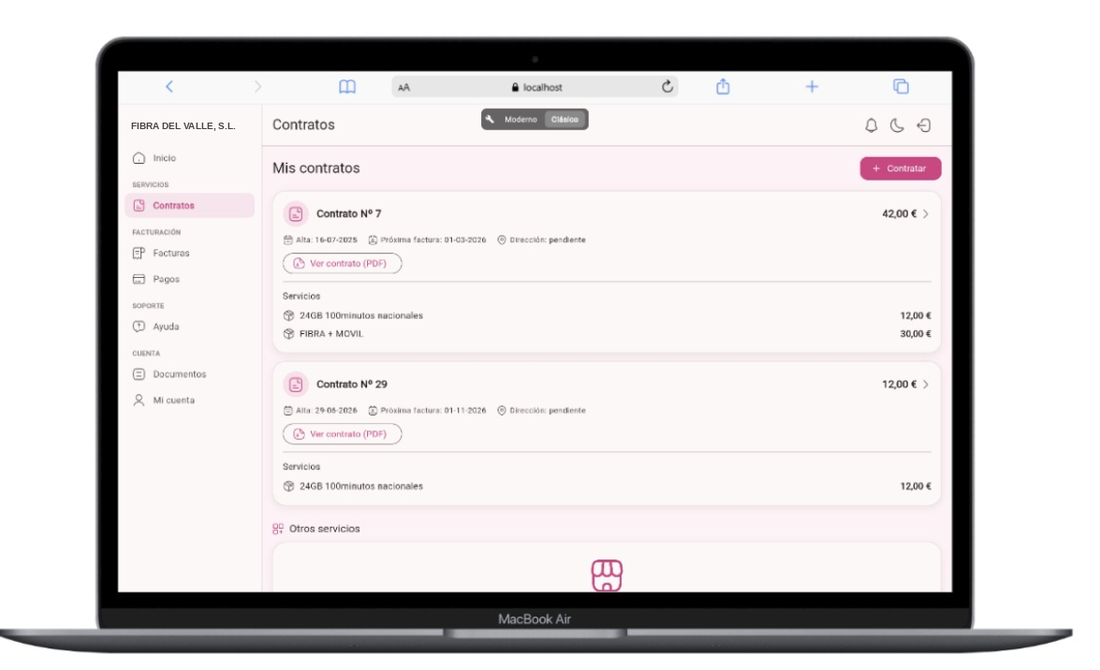
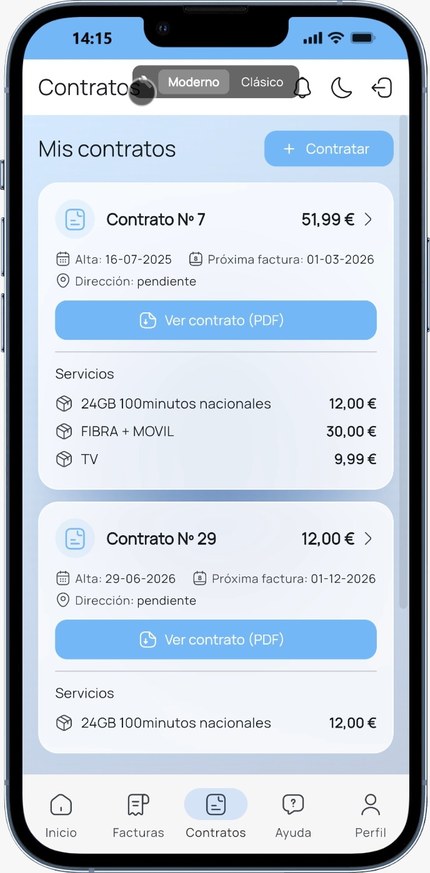
With your brand, your colours and your plans. The customer never sees the WispControl name.
In half an hour we'll show you the three that matter to you, with data like yours. No PowerPoint.